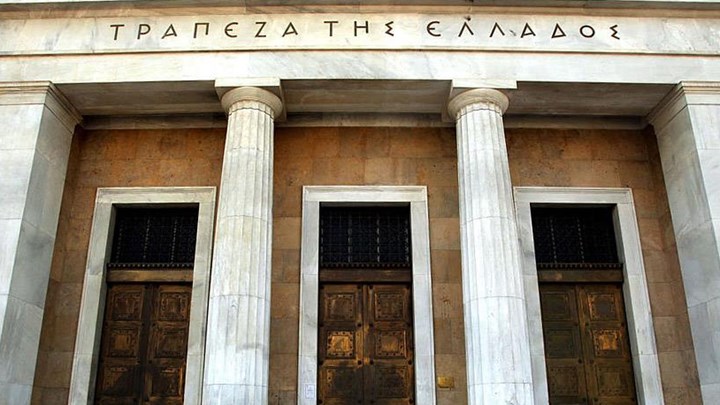
The Bank of Greece (BoG) reaches this conclusion in its interim Monetary Policy Report, noting that “new partnerships are already emerging, alongside mergers and acquisitions involving foreign banks and other financial institutions.”
The report highlights a series of positive developments in the Greek banking system throughout 2025, including stronger credit growth to the real economy, a further decline in borrowing costs, rising deposits, and an additional reduction in non-performing loans.
For small and medium-sized enterprises (SMEs), the BoG underscores the decisive role of the Recovery and Resilience Facility (RRF) and European development programs in facilitating access to cheaper financing. For households, the report points to the return of credit expansion to positive territory for the first time since October 2010.
Bank lending to non-financial corporations accelerated markedly during the January–October 2025 period, recording an average annual growth rate of 16.0%, compared with 8.5% over the same period in 2024—one of the strongest performances in the euro area. At the same time, the average monthly net flow of bank financing to SMEs eased to €438 million from €557 million.
“The resilience of business credit growth reflects stronger loan demand, driven by increased economic activity and lower lending rates,” the report notes.
Credit expansion was further supported by co-financing and guarantee schemes of the European Investment Bank (EIB) Group and the Hellenic Development Bank, as well as by RRF-backed co-financed loans, whose disbursements increased slightly in the first ten months of 2025 compared with a year earlier.
Borrowing Costs Fall Sharply
Borrowing costs declined significantly across all categories of corporate lending, with steeper reductions observed in loans exceeding €250,000, typically extended to larger firms. The weighted average interest rate on new business loans fell to 3.9% in October 2025, around 110 basis points lower than at the end of 2024.
Since the start of the downward trend in August 2023, business lending rates have fallen by more than 2.5 percentage points, reversing approximately 70% of the increase recorded during the tightening phase of the Eurosystem’s policy rate cycle.
Programs run by the EIB Group, the Hellenic Development Bank, and RRF-backed loans played a pivotal role. Around one-third of the gross flow of new bank lending to non-financial corporations is estimated to be linked to these schemes. SMEs benefited disproportionately, with more than 40% of their new financing tied to lower interest rates and/or reduced collateral requirements.
The interest rate differential between Greece and the euro area for SME lending narrowed further, averaging 48 basis points in the third quarter of 2025 and falling to 36 basis points in October, down from a peak of 335 basis points in the past decade. The corresponding spread for household mortgage lending stabilized at around 25 basis points.
The BoG expects further pass-through of Eurosystem policy rate cuts to lending rates, citing ample bank liquidity and improved asset quality as factors supporting narrower interest margins and lower borrowing costs.
Deposits Continue to Rise
Private-sector deposits increased by €3.1 billion in the first ten months of 2025, compared with €0.7 billion in the same period last year, reaching €206 billion in October. Household deposits rose strongly, supported by higher nominal disposable income and positive net credit flows.
SME deposits also increased, mainly in overnight accounts, in line with the continued expansion of business lending.
The non-performing exposure (NPE) ratio remained low at 3.6% in September 2025, down from 4.6% a year earlier and approaching the euro area average of 2.2%. The share of loans classified as Stage 2 also declined, falling to 6.5% in Greece, compared with 9.6% in the euro area.