According to EY’s recent global survey, “DNA of the Treasurer,” which is based on insights from more than 1,200 treasurers and senior finance executives, the majority anticipate profound changes in the scope and responsibilities of the treasury role by 2030.
More than eight out of ten treasurers (83%) believe their role will undergo a fundamental transformation over the next five years, a view shared by 84% of CFOs. The survey highlights that the ability to identify opportunities for value creation and business growth will be a critical success factor for the treasurer of the future. In this context, treasury functions are increasingly expected to play an active role in liquidity and capital optimization, strategic insight generation, participation in cross-functional initiatives across the organization, and talent development.
High expectations, tangible constraints
The expansion of the treasury role reflects the heightened expectations of CFOs, with 84% stating that they expect treasury teams to actively contribute to identifying new sources of value. However, the survey also reveals a clear gap between expectations and reality: only 52% of treasurers believe they currently play a meaningful role in value creation.
Key obstacles include the significant time devoted to managing relationships with financial institutions and investors (33%), day-to-day operational responsibilities (33%), and a lack of time to develop new skills (32%). At the same time, fewer than three in ten treasurers (27%) express strong confidence that their financial risk management strategies effectively support better business decision-making, while only 29% have full responsibility for working capital and liquidity flow management.
Technology and human capital at the core
Despite these challenges, treasury functions are emerging as early adopters of technology. Seventy percent of treasurers already use artificial intelligence tools in critical day-to-day operations, while 82% leverage data analytics and visualization solutions. For nearly one in three respondents (30%), technology and data represent the primary drivers of value creation, while 25% identify the cultivation of an innovation-driven culture as a key differentiating factor.
Strong emphasis is also placed on human capital development, with 70% of treasurers stating that they actively invest in strengthening their teams through mentoring, enhanced collaboration, and professional development. Nevertheless, nearly half (49%) acknowledge that further training could significantly improve liquidity management processes. At the same time, a divergence in perceptions remains regarding leadership skills: while 28% of CFOs believe stronger leadership capabilities are required, only 18% of treasurers consider this an immediate priority.
The role of treasury in Greece
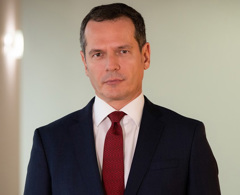
Commenting on the findings, Triantafyllos Stavrakis, Partner and Head of Financial Accounting Advisory Services at EY Greece, emphasized that treasury is no longer confined to a purely administrative role. In an environment of heightened uncertainty, treasurers can act as strategic enablers, leveraging liquidity, risk insight, and data to support critical decision-making.
For Greece in particular—a market shaped by multiple crises—this role takes on added importance. According to EY, the key challenge lies in transforming the experience, flexibility, and adaptability of treasurers into strategic value, positioning treasury as a hub for decision-making, technological enablement, and innovation.