Although a significant portion of the projects had already been announced by the Ministry of Infrastructure and Transport, the details of the contract reveal schedule adjustments and revisions of targets that carry particular significance.
The contract text now includes annexes that had not been previously made public, such as Annex D, which outlines Hellenic Train’s investments and provides a detailed project timeline. In contrast, Annex A, containing the full list of train services, was not submitted, as it does not require parliamentary approval.
In the infrastructure segment, the most notable example is the Sepolia railway line undergrounding project. While initial communications suggested that the project would be completed by the end of 2027, the contract clarifies that by 31 December 2027 only two of the four underground tracks will be delivered. This means that the existing single track will be upgraded to a double track, improving speed and reliability, but the quadruple corridor—which would allow a substantial increase in suburban and intercity services—is postponed indefinitely. It is worth noting that when the original contract was signed in 2018, the project’s completion was planned for 2023.
Equally critical is the restoration of the main Athens–Thessaloniki corridor. According to the contract, by 31 August 2026, the works will be completed and the ETCS safety system fully operational, allowing travel times under four hours to be restored, as was the case before the damage caused by Storm Daniel. Earlier, by 30 June 2026, the Agioi Theodoroi–Loutraki line, a 6.4-kilometer project that began in 2019 with an original completion target of 2020, is scheduled to become operational, after facing multiple delays.
By the end of 2026, the Western Attica Suburban Railway (Ano Liosia–Megara) is also expected to be operational. By the end of 2027, the railway is projected to extend from Athens to Rio, near Patras, with full ETCS installation. At the same time, the lack of remote control on the Ano Liosia–Kiato section remains unresolved, as the reinstallation of the system vandalized in the past has not yet been completed. The last major projects included in the timeline are the Larissa–Volos and Palaiofarsalos–Kalambaka lines, with a target completion by the end of 2028.
On the investment side, 31 December 2027 is a milestone for Hellenic Train, as by that date 23 new electric trains, with a total cost of €308 million, must have been delivered and put into service. One year earlier, by the end of 2026, the company is required to submit a complete approval dossier for all new train sets. Additionally, investments of €15 million are planned for IT systems and €20 million for the upgrade of leased maintenance facilities.
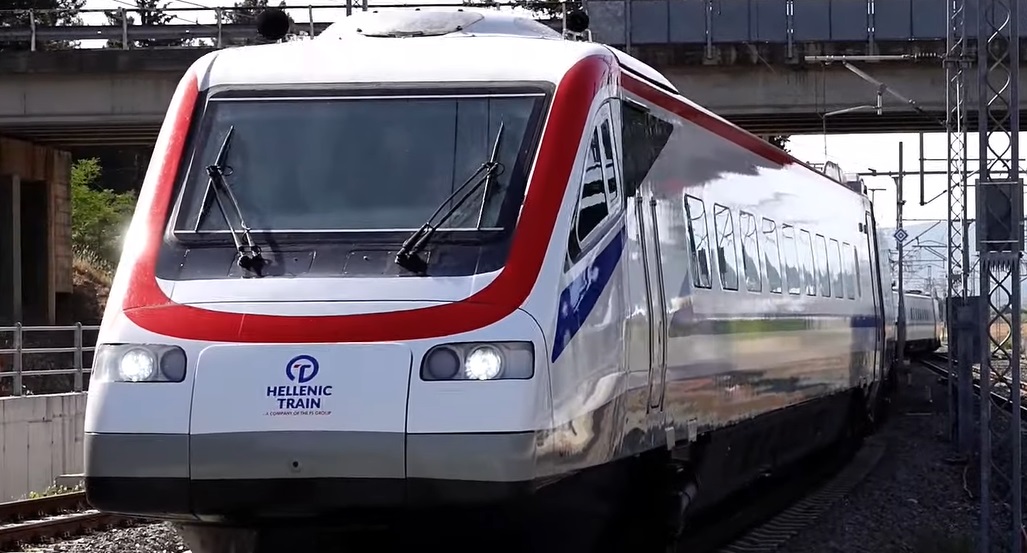
Special mention is made of the so-called “Silver Arrows” (ETR470), for which a new investment of €19 million is planned by the end of 2029, aimed at restoring and returning them to service, despite their problematic operational history both abroad and in Greece.
Overall, the revised contract secures investments totaling €420 million, introduces stricter penalties for delays and train immobilizations, strengthens the passenger compensation framework—including doubling payments for serious incidents—and establishes digital monitoring of service execution through a geolocation system. It also sets reciprocal obligations, as in cases of infrastructure restoration delays, the State is required to compensate the operator for unperformed services.