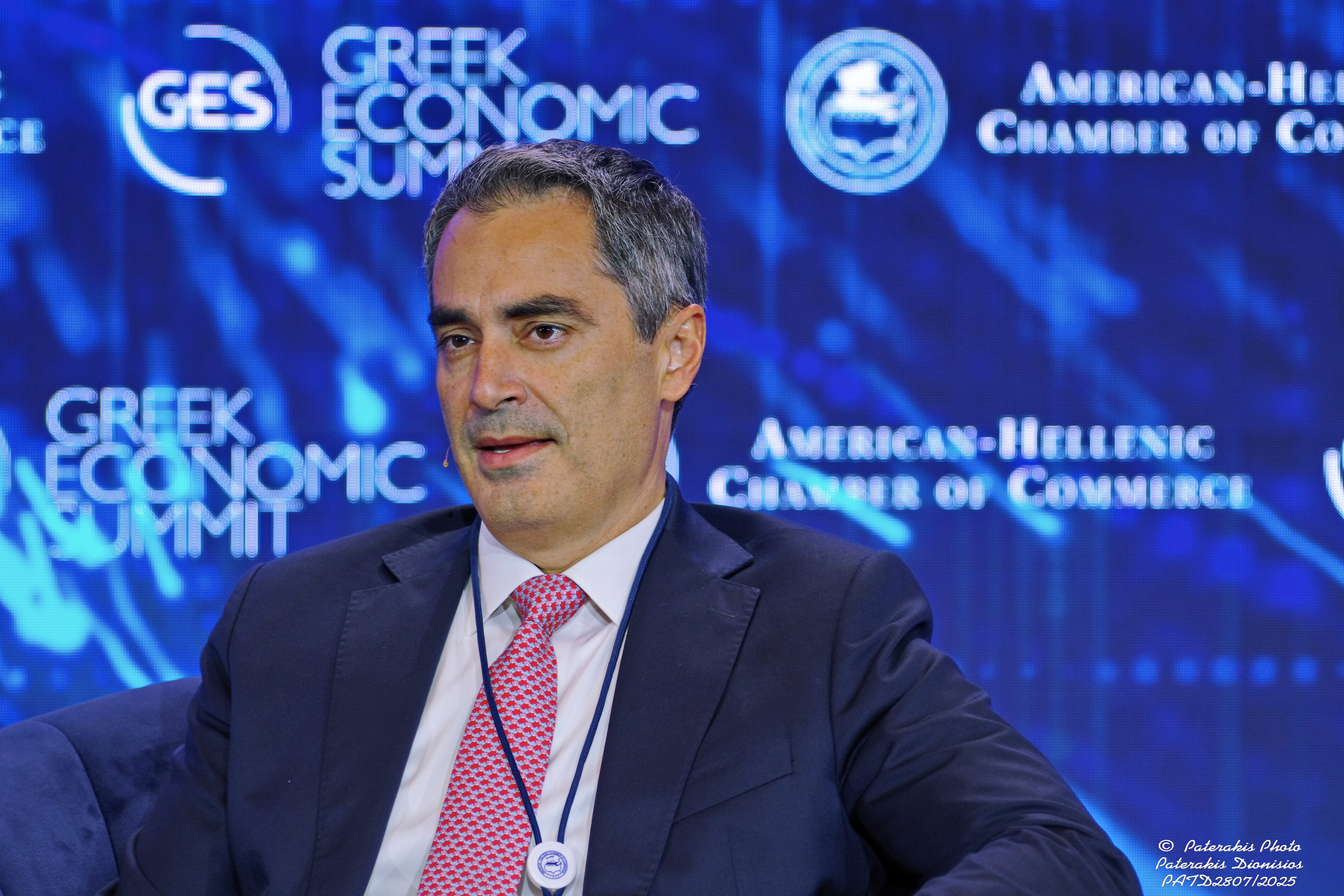
“Effective initial planning, proper construction immediately thereafter, and systematic maintenance throughout the project’s lifecycle serve as catalysts for its resilience against natural disasters. Today, due to the substantial investments of recent years, the country possesses one of the safest networks of national road axes in Europe. This achievement was made possible through close cooperation between the public and private sectors,” he added.
A critical factor for rapid and effective response in emergency situations is the collaboration between the public and private sectors. The severe weather event “Daniel” revealed that smaller-scale infrastructures suffered disproportionately greater damage compared to those constructed, maintained, and operated by private entities. “Nevertheless, even in this case, the contribution of private actors in collaboration with the State was crucial: I recall that the GEK TERNA Group alone deployed more than 200 machines for the immediate response to the disaster and the temporary restoration of damages in the first days following the storm,” he emphasized.
Traffic Congestion
Addressing the issue of traffic congestion, he noted that there are two schools of thought. “The European approach prioritizes the creation and strengthening of mass transit systems, whereas the American approach focuses on the development of highways, boulevards, and major road axes. Critics of the latter argue that the easier it is to use private vehicles, the more demand increases, resulting in greater congestion and pollution,” he stressed. For Athens, a hybrid approach is required, given that half of Greece’s population resides in just 3% of the country’s area, while infrastructure has remained largely outdated for decades. Encouragement of public transportation use and the promotion of sustainable mobility are necessary, alongside the development of essential road infrastructure.
He also reminded that, in Greece, an average of fifteen years typically elapses between the conception of a project and its completion and full operation. A few years ago, legislative changes allowed private entities to “substitute” the State in the initial maturation and preparation of infrastructure projects. Through so-called Standard Proposal submissions, significant interventions directly related to traffic congestion have been proposed: the bypass of the Athens basin via the Elefsina–Oinoi road connection, and the undergrounding of the Hymettus ring road from Kareas to Vouliagmenis Avenue. These proposals were submitted three years ago, but progress has since been limited, partly due to the complexity of the projects.
“In any case, collaboration between the public and private sectors can continue to address new needs. Solutions exist. It is only necessary to focus on accelerating their implementation. The challenge is not planning itself, but rather to better schedule how these projects will be executed so that they become realistic and feasible,” concluded Mr. Moustakas.